
There’s something undeniably satisfying about serve and volley tennis.
You hit a serve, charge forward and finish the point in just a couple of shots. It’s fast, aggressive, and puts your opponent under pressure from the very first moment.
Once upon a time, this was the way to play tennis. Players like Pete Sampras and Stefan Edberg built their entire game around it. But as courts slowed down and baseline rallies took over, serve and volley quietly faded into the background.
But here’s the thing… It still works, and the numbers prove it.
- Serve and volley: it’s an aggressive tennis tactic that takes time away from your opponent.
- The How: you serve, you rush to the net and you volley.
- It used to be the main way of playing tennis. Some players used it 60-70% of the time. These days, it’s only used in about 5% of points.
- It’s still incredibly effective. When players serve and volley, they win the point 72% of the time on average.
What Is Serve and Volley?
Serve and volley is exactly what it sounds like:
👉 You serve… and then immediately move forward to the net to finish the point.
Instead of staying back and getting into a long rally, you’re looking to:
- Force a weak return
- Take time away from your opponent
- Finish the point quickly at the net
It’s an attacking strategy built on putting your opponent under pressure and winning points quickly. And it all starts with the one shot in tennis where you’re completely in control of the point: the serve.
When Serve & Volley Ruled Tennis
If you go back to the 80s and 90s, serve and volley wasn’t just a tactic, it was the most dominant playing style in tennis.
Some of the best tennis players in history like Pete Sampras, John McEnroe, Boris Becker, Stefan Edberg and Martina Navratilova used serve and volley relentlessly. In fact, they built their entire game around it and used it more than they played from the baseline:
| Player | Matches | Serve & Volley Frequency | Serve & Volley Win% |
| Stefan Edberg | 191 | 78.8% | 67.2% |
| John McEnroe | 65 | 73.5% | 64.5% |
| Martina Navratilova | 72 | 70.1% | 61.8% |
| Pete Sampras | 242 | 60.7% | 70.5% |
| Boris Becker | 164 | 57.4% | 68.3% |
Courts were faster, the ball stayed lower, and players simply didn’t have the same level of baseline power and passing shots we see today.
Why don’t tennis players serve and volley anymore?
The reality is, tennis has changed. In today’s game, we have:
- Slower court surfaces
- Higher bouncing balls
- Better rackets and strings (which provide more spin and control)
- Players are becoming more consistent from the baseline
The result? Serve and volley has become a lot more difficult to master, making baseline tennis much more common.
Is Serve and Volley Dead?
Based on performances tracked by Tennis Abstract over the last 52 weeks, male players serve and volley only 4.9% of the time. And it’s even less common on the women’s tour, as female players only use it 0.5% of the time.
Even players like Roger Federer, who in modern tennis is probably the closest you’ll find to a net player, only serve and volleyed 11% of the time. That’s more than double the current tour average, but is still quite a way off Stefan Edberg’s 79%.
So compared to tennis in the 80s and 90s, it’s safe to say that serve and volley tennis is rare. But is it dead?
Well, taking a closer look at the numbers might change your mind.
Why Serve and Volley Still Works Today
Even though you don’t see it as much on tour, serve and volley can still be incredibly effective.
Male players might only serve and volley 4.9% of the time, but when they do they win a whopping 72% of points.
The funny thing is… there are lots of modern tennis players like Carlos Alcaraz, Taylor Fritz, Alexander Zverev, etc. that have a better win percentage on serve and volley than Roger Federer (69%). Even Rafa Nadal, who had so much success from the back of the court, won 77% of his serve and volley points. But he only used it 1.5% of the time.
Player | Matches | Serve & Volley Frequency | Serve & Volley Win% |
Roger Federer | 784 | 10.6% | 69% |
Novak Djokovic | 653 | 2.4% | 70.5% |
Rafael Nadal | 525 | 1.5% | 76.9% |
Andy Murray | 314 | 2.0% | 68.4% |
Alexander Zverev | 330 | 2.5% | 71.8% |
Carlos Alcaraz | 262 | 6.1% | 75.8% |
Jannik Sinner | 292 | 1.6% | 70.4% |
Grigor Dimitrov | 197 | 1.3% | 72.6% |
Taylor Fritz | 169 | 0.6% | 77.8% |
Ben Shelton | 63 | 11.1% | 66.2% |
👉 The key takeaway is:
Low Usage… High Success Rate
So even in today’s baseline-dominated game, coming forward is still one of the most efficient ways to win a point.
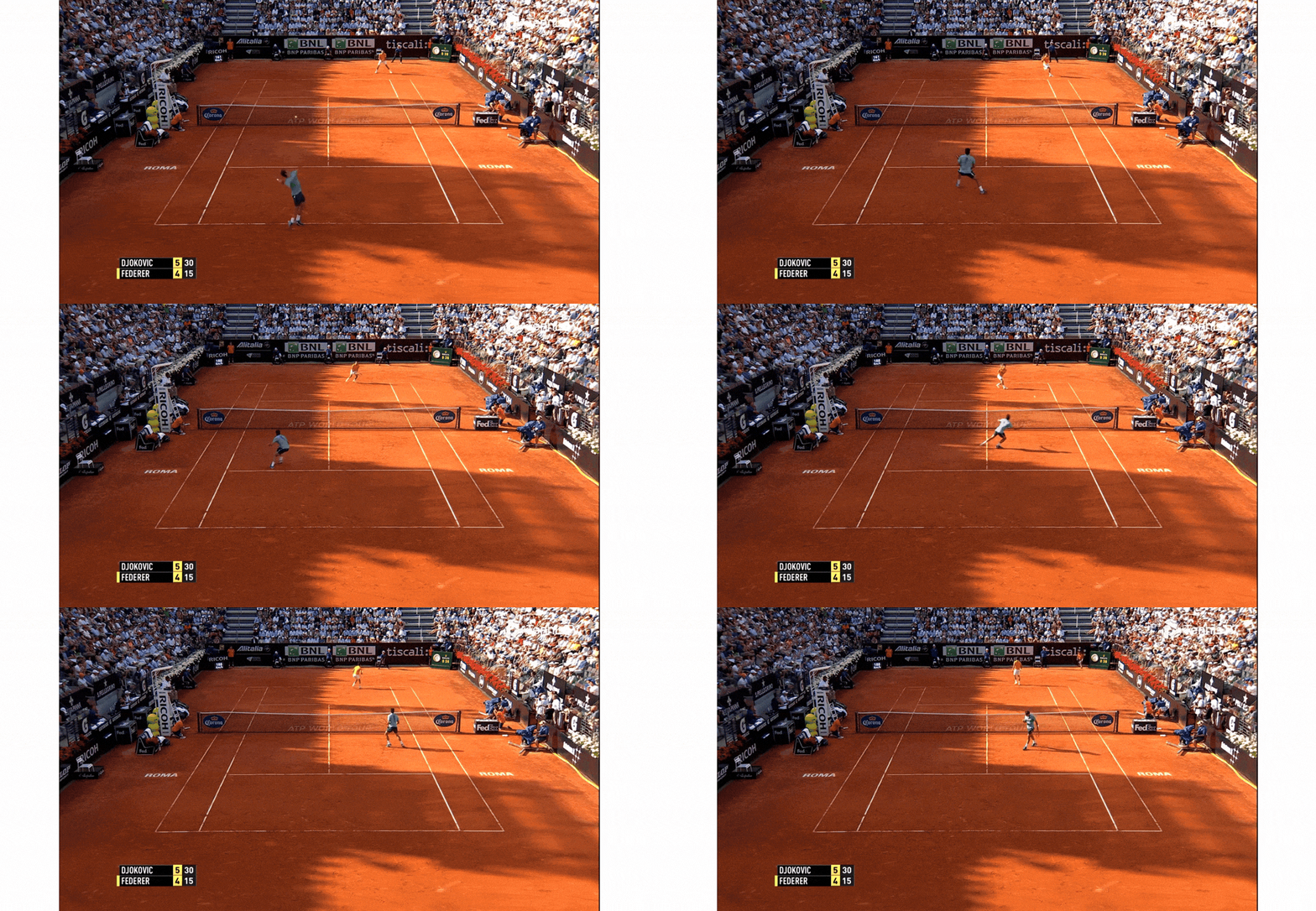
How to Serve and Volley in 3 Simple Steps
1. The Serve: Placement Over Power
It all starts with the one shot you’re in full control of: the serve. You don’t need a huge serve, you need a smart one. A well placed serve will be a lot more effective. Your goal? A weak, predictable return.
Focus on:
- Wide serves to pull your opponent off court
- Body serves to jam them up
2. Move Forward & Split Step
When you serve and volley your aim is to get to the net as quickly as possible. After your serve:
- Move forward immediately
- Time your split step as your opponent hits
- Close the net with purpose
There’s no time to hesitate, you need to fully commit to it.
3. The Volley: The Point Decider
Get this right, and the point is usually yours. You’re not trying to hit a winner, you’re trying to keep the ball low, place it well and stay in control of the point.
Hitting the right volley is key in setting you up for an easy finish.
When Should You Use Serve and Volley?
If there’s one thing we can learn from the pros here, it’s that using serve and volley sparingly and in the right situations is key. Here’s when to use it:
- On Faster Courts: serve and volley works best on faster, lower bouncing courts like grass, astroturf or indoor hard courts. Why? The ball stays lower and moves through the court faster, giving your opponent less time to react and making clean passing shots much harder to execute.
- Against Defensive Players: if your opponent relies on consistent rallies from the back of the court, serve and volley is a great way to disrupt their rhythm. It’s also particularly useful if you notice your opponent chipping the return back into play over and over.
- As a Surprise Weapon: serve and volley is far more effective when your opponent isn’t expecting it. If you’ve been rallying from the baseline or playing fairly neutral points, suddenly coming forward can completely catch them off guard.
- In Big Moments: if you’re comfortable serving and volleying, using it in key moments like break points can put your opponent under pressure and force them to come up with something special in a tight situation. It’s a bold move, but can be very effective.
- In Doubles: serve and volley is one of the most common doubles strategies because the team at the net typically wins the point.
You don’t need to do it every point, but using it at the right moments can be incredibly effective. Like the pros do, using it just 5-10% of the time can be enough to break your game up enough to throw your opponent off.
How to Beat a Serve and Volley Player
If you’re on the other side of the net, here are a few quick tips for beating a serve and volley player:
- Hit Low Returns: aim at their feet to make the first volley as difficult as possible. Generally, your best option is to aim just above the centre net strap, which almost guarantees a low volley close to their body.
- Don’t go for Passing Shots: that’s what they want you to do. Instead, aim at your opponent when their at the net. Volleying close to your body is very uncomfortable and it makes it very tricky to actually put the volley away. Plus, a shot down the centre of the court is much lower risk.
- Lob your opponent: every now and then, try lobbing them. Especially if they get very close to the net, hitting a high, deep shot can catch them out. And most importantly, it can break their rhythm and make your game much more difficult to predict.
Serve & Volley FAQs
Who was the best serve and volley player?
When someone says “serve and volley”, the first player that springs to mind is Pete Sampras. He might not have used it the most, but he was definitely the best at it. Pistol Pete, as he was known back in the day, serve and volleyed about 60% of the time, and won 70% of the points when he did.
Was Roger Federer a serve and volley player?
It’s tempting to think of Roger Federer as a serve and volleyer but, actually, Federer only serve and volleyed 10-11% of the time. That said, that’s double the tour average today, so he did use the tactic a lot more than his opponents. In reality, Roger Federer was more of an All Court player who dominated from the baseline and used serve and volley sparingly, but very effectively.
Is Alcaraz a serve and volley player?
Again, it’s tempting to think that but no. Carlos Alcaraz does use serve and volley more than most players, but he still only serve and volleys 6% of the time. That said, his wins more than 75% of the points when he does, so he’s actually one of the best players doing it.
What’s the difference between serve and volley and all-court play?
Serve and volley used to be a strategy. Players built their entire game around it. But these days, serve and volley is more of a tactic, used about 5% of the time. All Court tennis players use a combination of net play and baseline tennis, which explains the name.