
I picked up Open expecting a classic tennis autobiography – a few stories from the tour, some insight into the big matches, maybe a bit of behind-the-scenes drama.
What I didn’t expect was a book that would genuinely change how I think about tennis.
Andre Agassi’s story isn’t just about winning Grand Slams. It’s about pressure, identity, frustration, reinvention – and somehow finding a way to perform at the highest level while battling all of it. Most of all, it’s about a tennis player’s love-hate relationship with tennis.
And as a club player, that hit harder than any forehand winner. Because a lot of what he goes through? We feel it too – just on a smaller stage.
About The Book
Open by Andre Agassi isn’t your typical sports autobiography – and that’s exactly what makes it so compelling.
The book follows Agassi’s journey from a childhood shaped by relentless pressure – driven by his father’s obsession with tennis – through to his rise as one of the most talented and unpredictable players on tour. Along the way, we see the highs (Grand Slam wins, world No.1) and the lows (loss of motivation, personal struggles, and a dramatic fall down the rankings).
What sets Open apart is its honesty. Agassi openly admits that, for much of his career, he didn’t even like tennis. Instead, the story becomes less about trophies and more about identity – figuring out who he is beyond the game.
Some of the key moments Andre talks about in his book include:
- His early development under Nick Bollettieri
- His rivalry with the game’s biggest names like Pete Sampras & Boris Becker
- His struggles with confidence, purpose and identity
- His late-career resurgence under Brad Gilbert
By the end of the book, what you’re left with isn’t just the story of a tennis career – it’s the story of someone learning how to compete, adapt, and eventually find meaning in something they’ve resisted for most of their life.
And that’s what makes it so relevant for everyday players.
What I Learned From Andre
Identity is everything
From very early on in the book, it becomes obvious that Andre is his own man. Tell him he can’t do something, and he’ll make it his life mission to make it happen.
And I think that’s often reflected in the way he presented himself on court, particularly during the early stages of his career. Throughout the first half of the book, Andre struggles to establish his “personality” on court. The hair-piece, while iconic, often served as a disguise. Here’s the thing… When he got rid of it, he felt liberated.
I think we can read into this in so many ways. If you ask me the key learning is this… be yourself. Forget about what everyone else thinks. If you feel good, that’s all that matters.

Reinvention Is Always Possible
The Brad Gilbert era is one of the most interesting parts of the book. Despite already being relatively successful, Brad Gilbert helps Andre reinvent his game. At the start of their partnership, here’s how Brad summed up Andre’s game:
Quit going for the knockout. Stop swinging for the fences. All you have to be is solid. Stop thinking about yourself, and your own game, and remember that the guy on the other side of the net has weaknesses. Attack the weaknesses. You don’t have to be the best in the world every time you go out there. You just have to be better than one guy. Instead of you succeeding, make him fail. Better yet, let him fail.
Brad Gilbert on Andre Agassi's Game
In other words… Less flashy. More effective.
Until then, Andre won his matches by playing quick, aggressive tennis. On a good day, he’d obliterate his opponent. On a bad day, he’d collapse.
And if we’ve learned anything, it’s that the best tennis players in the world learn to win matches when they aren’t playing well. Which is, coincidentally, something Brad Gilbert himself really hammers home in his book Winning Ugly.
In working with Brad, Andre learned to play more controlled, consistent tennis and took his game to a whole new level.
At a club level we love hitting flashy tennis shots, hitting winners left, right and centre. However, when you crunch the numbers, you’ll probably win a lot more matches just by being more consistent than your opponent. That doesn’t mean just getting the ball back into court. It means waiting for your opponent to make the mistake or waiting for the right moment to step in and take advantage.
Trust The Process
We’re often quick to judge performances based on results. We lost, so the performance was bad. But that’s not always the case, and the book highlights that.
In tennis, one of the biggest things we can learn is to trust the process and give it enough time to work. During his first few weeks of working with Brad, Andre struggled to win matches. Brad’s response? “Good things are about to happen”.
I’m not convinced Andre trusted the process at the time, but he stuck with it long enough to let the magic happen.
Don’t be so quick to judge your tennis based on results, look at the performance as a whole. Forget about whether you won or lost, and focus on what really worked for you and what didn’t, regardless of the score.
Build A Team Around You
Surround yourself with the right people. Nobody can do this alone.
At the start of the book, it feels a bit like his journey in tennis is all about him. Don’t get me wrong, that’s normal in soooooo many ways.
But I definitely got the sense that as his career progressed, Andre learned that his main reason to play tennis was for the people around him. Whether it was for his wife Stefanie and kids, for Brad and Gil or for his school and foundation, the people around him gave him a greater purpose in tennis beyond just self-satisfaction.
That’s such an important lesson for developing juniors and even tennis coaches. That might be a bit difficult to relate to for club players, but the way I see it is this…
“Surround yourself with people who help you enjoy the game, and you’ll enjoy it too. Whether that’s social players, teammates you’re playing league matches with or even a tennis coach”.
In the Fifth Set, It's not about the tennis
In the book, it’s about the fifth set. In our world, it’s about the end of any match. Whether you’re one of the best tennis players in the world or a recreational player facing your biggest opponent at your club’s annual tournament, getting tight in matches is normal.
When it comes down to a few decisive moments in matches, it’s less about the tennis and more about your mental strength. Forget about hitting winners or playing great tennis. Focus on being consistent, being patient and either waiting for your opponent to make the mistake or waiting for the right moment to go all out.
What I'm Taking On Court With Me
You can Love & Hate Tennis at the same time
One of the biggest themes across Andre’s book is his love-hate relationship with tennis. In fact, for most of his career, he hated it. But he still showed up. Still competed. Still improved every day.
At a club level, we wrestle with the game day in and day out. One day we’re on fire and can’t miss. The next, we’re playing so badly we want to smash a racket and stop playing altogether. That’s ok, it’s part of the process. Don’t get disheartened, keep going. Feeling like you’re terrible at this is all part of the process. In fact, Andre even recalls a time when he decided to quit tennis and gave all his rackets away.
Sometimes, it’s less about the result and more about whether you’re enjoying it or not. Focus on playing tennis the way you want to play.
Final Thoughts
Open isn’t just one of the best tennis books I’ve read – it’s probably one of the most honest sports autobiographies full stop.
It’s a fantastic read for anyone who likes or even hates tennis with a passion. Whether you’re a club player looking to improve your mindset or a tennis fan looking for a deeper look into the life of a tennis player, Andre Agassi’s Open can teach us all a lesson or two, on and off the court.
Want to add it to your reading list? Get it on Amazon:
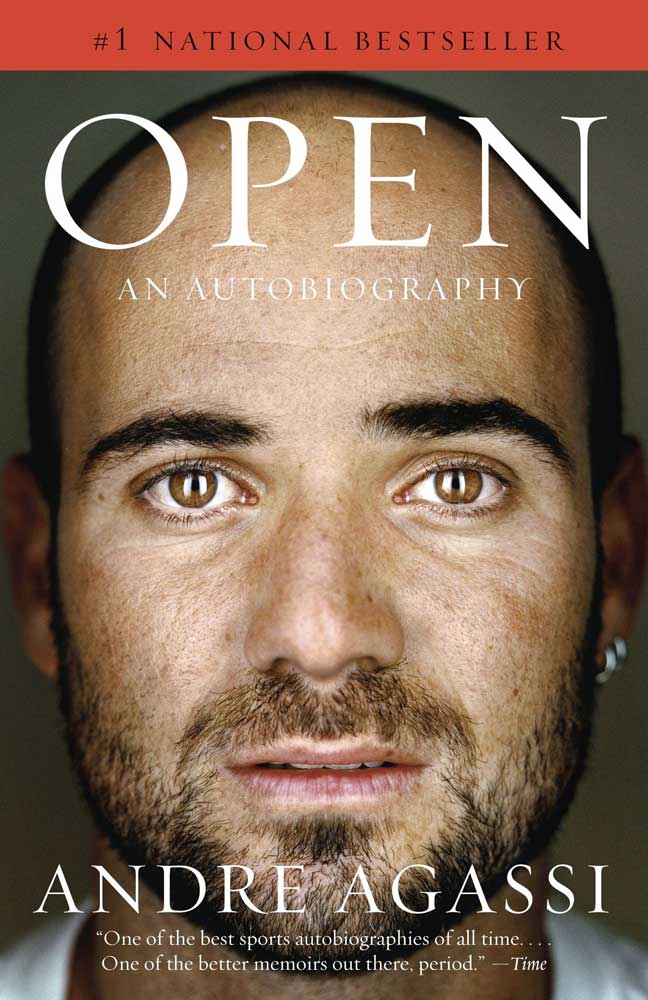
Tennis Autobiography
Open
By Andre Agassi
Agassi’s Open is widely regarded as one of the best sports autobiographies ever written – not just in tennis. Brutally honest and deeply human, it reveals his lifelong love-hate relationship with the sport, his struggles with fame, and the personal demons behind his success. It captures the loneliness of tour life, the thrill of victory, and the pain of constant reinvention. Whether you’re a tennis fan or not, it’s an unforgettable story about resilience and identity.